⚡ Quick answer: For a standalone support bot, Chatbase, Tidio, or Intercom are fastest; for cross-tool automation, Lindy. QuantumByte is different — it builds the app the assistant lives inside, so the assistant can act on real data (look up a record, update an order), not just answer questions.
The best AI app builders for chatbots and virtual assistants in 2026 are Botpress, Chatbase, Tidio, Intercom, Lindy, Voiceflow, and QuantumByte. Most of these build a standalone bot — a widget you embed on a site or connect to support. QuantumByte takes a different angle: it builds the app the assistant lives inside, so the bot can actually do the work — look up a record, update an order, route a request through a real workflow — instead of just answering questions. Which one is "best" depends on whether you want a chat widget or an assistant wired into a working application.
This guide compares the seven by what kind of assistant they build, how much they can actually do, and who each one fits.
Two kinds of "AI assistant" — pick the right one
The word "chatbot" hides a big split, and choosing the wrong side wastes weeks:
- Standalone bots (Botpress, Chatbase, Tidio, Intercom, Voiceflow) — a conversational widget you train on content and embed. Great for support, FAQs, and lead capture. They answer.
- Workflow assistants (Lindy) — agents that act across your tools (inbox, CRM, calendar) to do recurring work. They act on tasks.
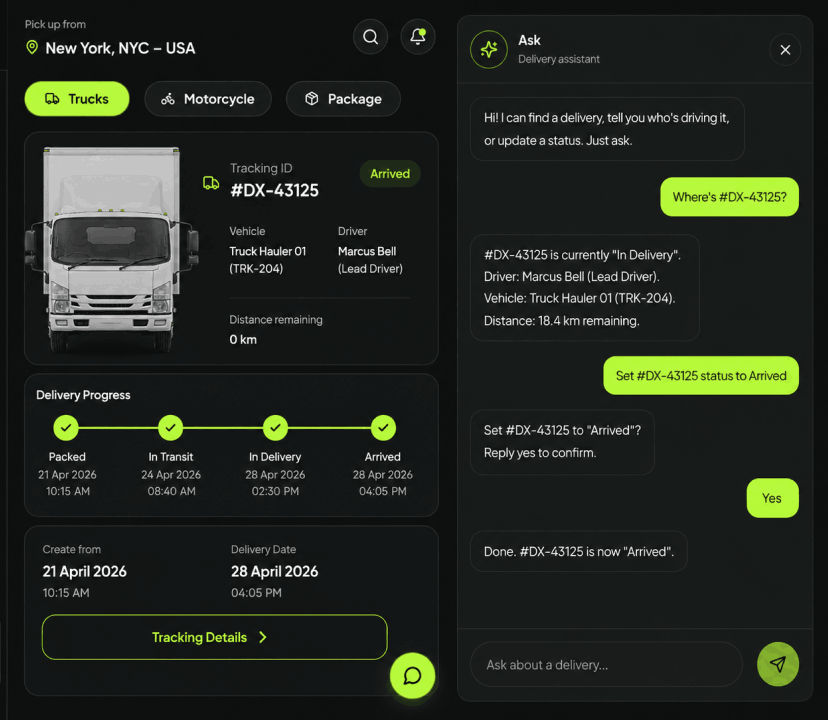
- In-app assistants (QuantumByte) — an assistant built into a deployed application with real data and actions, so it can read and change records inside the app it lives in. It operates the app.
If you need a support widget, a dedicated bot builder wins. If you need an assistant that's part of a real product or internal tool, an app builder that ships the whole app is the better foundation.
How we evaluated these chatbot and assistant builders
We compared every tool on what decides which kind of assistant you can build — not on feature count:
- What it builds — a standalone widget, a cross-tool automation, or an assistant inside a real app.
- Can it act on data? — answer from a knowledge base only, or read and change live records.
- Ease of setup — turnkey vs hands-on configuration.
- Total cost — sticker price plus per-seat fees and usage.
- Who maintains it — non-technical teams vs developers.
Findings draw on hands-on use of each platform's free tier, each vendor's official product and pricing documentation (linked in References), and public practitioner roundups. Pricing and product details reflect what vendors published as of mid-2026 and change frequently — confirm current pricing on each vendor's site before deciding.
The 7 best at a glance
| Builder | Builds | Best for | Can it act on app data? | Starting price |
|---|---|---|---|---|
| Botpress | Standalone bot | Custom, advanced chatbots | Via integrations | Free; usage-based |
| Chatbase | Standalone bot | Train-on-your-docs support bots | Limited | Free; from ~$40/mo |
| Tidio | Standalone bot | SMB support + sales chat | Via integrations | Free; paid tiers |
| Intercom | Support assistant | Customer support at scale (Fin AI) | Within Intercom | From ~$39/seat/mo |
| Lindy | Workflow assistant | Cross-tool automation | Yes, across tools | Free; paid tiers |
| Voiceflow | Bot/voice agent | Designing conversational flows | Via integrations | Free; paid tiers |
| QuantumByte | App + in-app assistant | An assistant inside a real app | Yes, natively | Free; $29/mo to deploy |
The 7 best, reviewed
1. Botpress
What it is: A developer-friendly platform for building custom, advanced chatbots with flexible logic and integrations.
Best for: Teams that want deep control over a custom bot's behavior and can invest in configuration.
Bottom line: The most customizable standalone bot builder — powerful, but more involved to set up than turnkey tools.
2. Chatbase
What it is: A tool that trains a chatbot on your documents and website to answer questions in your brand voice.
Best for: Fast support or FAQ bots grounded in your own content.
Bottom line: The quickest way to a docs-trained support bot. Limited when you need the bot to do things beyond answering.
3. Tidio
What it is: An SMB-focused live chat and chatbot platform combining support and sales automation.
Best for: Small businesses wanting support + lead capture in one widget.
Bottom line: A friendly, affordable all-in-one for SMB sites. Less suited to complex, custom assistant logic.
4. Intercom (Fin AI)
What it is: A customer support platform whose Fin AI agent resolves support conversations.
Best for: Support teams resolving customer questions at scale inside Intercom.
Bottom line: Best-in-class for AI customer support — if you're in (or moving to) the Intercom ecosystem. Per-seat and support-centric.
5. Lindy
What it is: An AI assistant platform that automates recurring work across inbox, meetings, CRM, Slack, docs, and scheduling.
Best for: Operators who want an assistant that acts across their existing tools, not just chats.
Bottom line: The strongest pick when the "assistant" is really cross-tool business automation. Less about an embeddable site widget.
6. Voiceflow
What it is: A platform for designing and building conversational and voice agents with a visual flow builder.
Best for: Teams designing structured conversation flows, including voice.
Bottom line: Excellent for mapping conversational design. You still wire it into your systems via integrations to make it act.
7. QuantumByte
What it is: An AI-native platform that builds a deployed application — and the assistant inside it — from a plain-language prompt.
Why it's different: The others give you a bot you embed; QuantumByte gives you the app the assistant operates. Because the assistant lives inside a QuantumByte-built application with its own database and multi-container architecture, it can read and change real records — look up a customer, update an order, route an approval — not just answer from a knowledge base. The Bear Team plans the app and its assistant as a visible Deck Blueprint before building, and Fast Track ($130/Story Point) brings in a human expert to tailor the assistant's behavior and integrations.
Best for: Teams that need an assistant as part of a real product or internal tool — one that does the work, not just talks about it.
Pricing: Free with 50 credits; $29/month to deploy; no per-seat fees; ~$35–80/month all-in.
Bottom line: The best foundation when the assistant needs to operate inside a working app with real data. It's not the pick if all you need is a lightweight support widget on a marketing site — a dedicated bot builder like Chatbase or Tidio is simpler for that.
Build an app with its assistant built in — start free with 50 credits. Try QuantumByte →
🐻 Copy this prompt into QuantumByte Build an assistant that does the work, not just chats. Paste this in:
Build and deploy an app with a built-in AI assistant: a customer records database, plus an assistant that can look up a customer, update their order status, and answer questions from my data. Show me the Deck Blueprint first, then ship it live at a real URL.
How to choose
1. Answer questions, or do work? A support/FAQ widget → Chatbase, Tidio, Intercom. An assistant that acts on data → QuantumByte (in-app) or Lindy (cross-tool).
2. Standalone, or part of an app? A widget for an existing site → a dedicated bot builder. An assistant inside a product or internal tool → QuantumByte builds both the app and the assistant.
3. How custom is the logic? Turnkey support → Chatbase/Tidio. Deep custom flows → Botpress/Voiceflow. Real app actions → QuantumByte.
4. Who maintains it? Non-technical teams do best with turnkey bots or QuantumByte's planned, human-supported build; Botpress and Voiceflow reward more hands-on configuration.
Who each tool is the wrong fit for
- QuantumByte — wrong if you only need a lightweight support widget on a marketing site.
- Chatbase / Tidio — wrong when the assistant must act on live app data, not just answer.
- Intercom — wrong outside a support-centric, Intercom-based workflow.
- Botpress / Voiceflow — wrong for non-technical teams wanting turnkey setup.
- Lindy — wrong when you need an embeddable customer-facing site widget rather than internal automation.
Frequently asked questions
What is the best AI app builder for chatbots and virtual assistants?
It depends on whether you need a standalone bot or an assistant inside a real app. Botpress, Chatbase, and Tidio lead for standalone support bots; Lindy for cross-tool automation; and QuantumByte for an assistant built into a deployed application with real data.
What's the difference between a chatbot and an in-app assistant?
A chatbot is a widget that answers questions from a knowledge base. An in-app assistant lives inside a working application and can act on real data — look up records, update orders, route requests. QuantumByte builds the latter; most bot tools build the former.
Which AI builder lets a chatbot actually do tasks, not just answer?
QuantumByte builds an assistant inside an app with its own database, so it can read and change real records. Lindy acts across your existing tools. Standalone bot builders like Chatbase mostly answer questions unless wired to external systems via integrations.
What is the easiest way to build a support chatbot?
Chatbase and Tidio are the easiest for a support or FAQ bot — train on your content or site and embed a widget in minutes. For an assistant that's part of a larger product, QuantumByte builds the app and assistant together from a prompt.
How much do AI chatbot builders cost in 2026?
Most start free. Dedicated bot tools run roughly $40/month (Chatbase) or per-seat (Intercom ~$39/seat). QuantumByte is usage-based with no per-seat fee — about $35–80/month all-in — and includes the full app the assistant runs inside.
Can I add an AI assistant to an app I'm building?
Yes. QuantumByte builds the application and its assistant together, so the assistant has native access to the app's data and actions. With other tools, you build the app separately and embed or integrate a bot afterward.
The bottom line
For chatbots and virtual assistants, the best builder depends on whether you want something that answers or something that does. For a support widget, Chatbase, Tidio, or Intercom are the fastest path. For cross-tool automation, Lindy. And when the assistant needs to operate inside a real product or internal tool — reading and changing live data — QuantumByte is the strongest foundation, because it builds the app and the assistant as one.
Ship an app with its assistant built in — start free, no credit card. Try QuantumByte →
Related comparisons
Part of our complete guide: The best AI app builder in 2026, ranked. Compare by need:
References
Official product & pricing sources
- QuantumByte. Product and pricing. https://quantumbyte.ai
- Botpress. Pricing. https://botpress.com/pricing
- Chatbase. Pricing. https://www.chatbase.co/pricing
- Tidio. Pricing. https://www.tidio.com/pricing
- Intercom. Pricing. https://www.intercom.com/pricing
- Lindy. Pricing. https://www.lindy.ai/pricing
- Voiceflow. Pricing. https://www.voiceflow.com/pricing
Independent roundups
- Lindy. Best AI chatbots for businesses. https://www.lindy.ai/blog/best-ai-chatbots-for-businesses
- Zapier. The best AI chatbot builders. https://zapier.com/blog/best-chatbot-builders/
- G2. Chatbot and conversational AI reviews. https://learn.g2.com