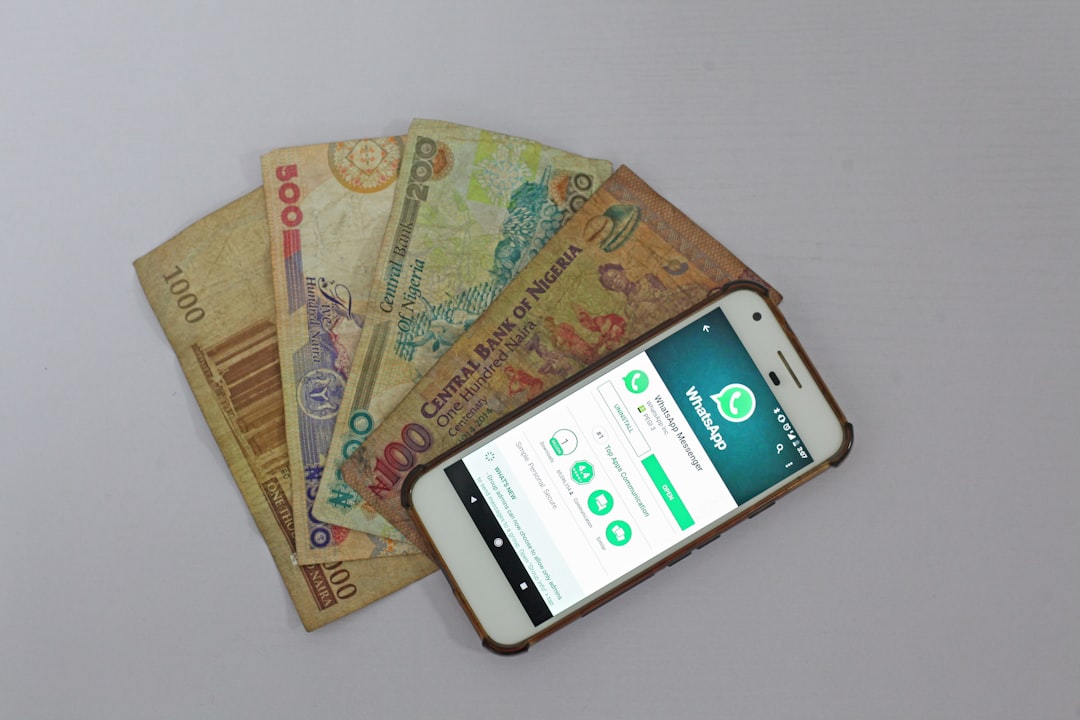
Free apps feel like magic. You download them, get value fast, and never enter a credit card. So, how do free apps make money? They do it by turning attention, upgrades, and transactions into revenue. They do this without blocking the first experience.
If you are building a product of your own, this matters. Your monetization model will shape your features, your onboarding, and even how you talk to users.
How do free apps make money? The quick answer
Free apps usually make money in one (or more) of these ways:
-
Ads: The app sells user attention.
-
Subscriptions: The app sells ongoing access, often with a premium tier.
-
In-app purchases (IAP): The app sells digital goods, credits, or feature unlocks.
-
Affiliate and partner revenue: The app earns a cut when users buy from partners.
-
Marketplace fees: The app takes a percentage when buyers and sellers transact.
Most successful apps mix models. The "free" part is the top of the funnel, not the business.
The five main ways free apps make money (and what each one requires)
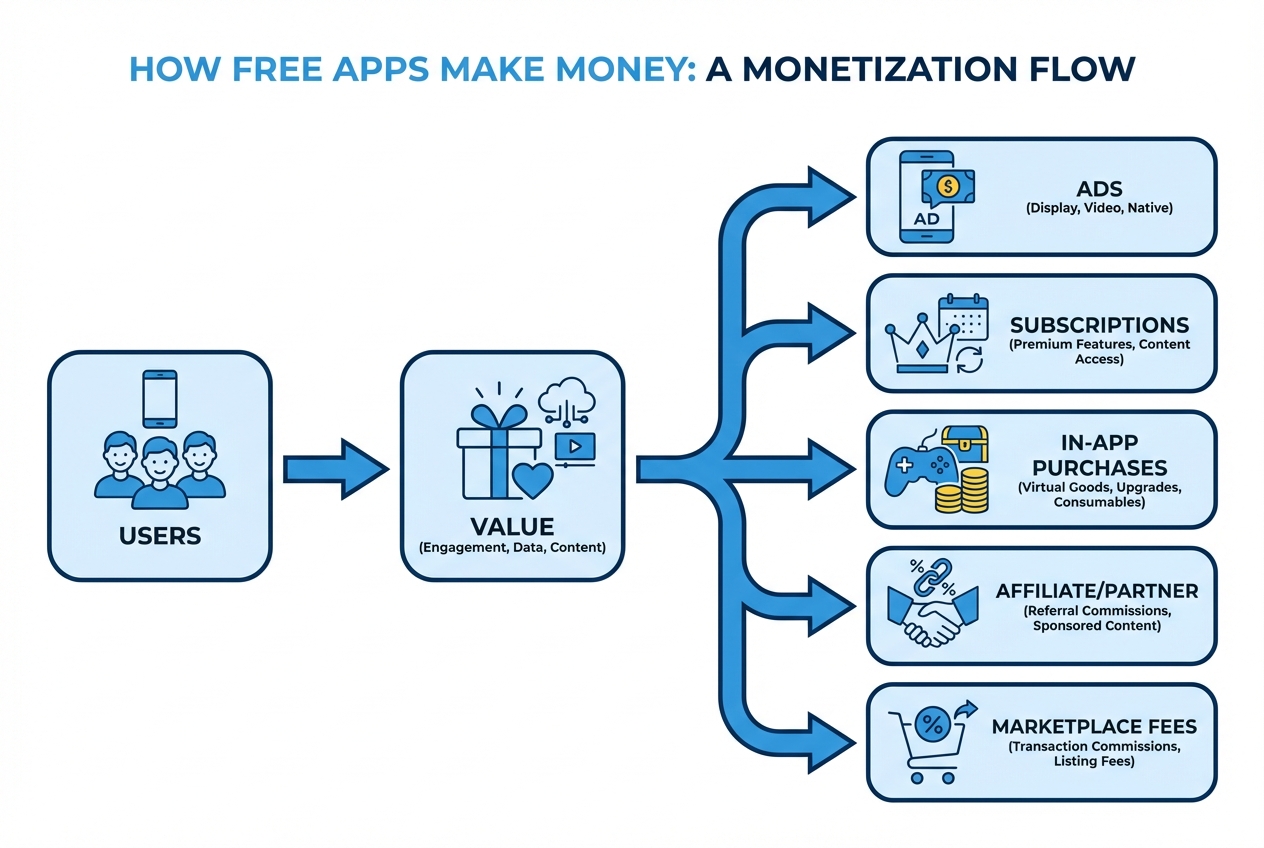
The cleanest way to think about monetization is: "What does the app produce that someone will pay for?" Sometimes that "someone" is your user. Sometimes it is an advertiser. Sometimes it is a business partner.
Monetization models at a glance
| Model | Who pays? | Best when… | What you must get right |
|---|---|---|---|
| Advertising | Advertisers | You have large, frequent usage and clear user segments | Retention, engagement, brand-safe placement, privacy compliance |
| Freemium subscription | Power users | Your product creates ongoing value (work, habit, progress) | Strong free tier, clear premium upgrade triggers, churn reduction |
| In-app purchases (IAP) | Users | You can sell add-ons that feel optional, not required | A fair "store," transparent pricing, entitlement tracking |
| Affiliate / partners | Partners | You influence purchase decisions (recommendations, reviews, booking) | Trust, attribution, and partner selection |
| Marketplace fees | Both sides (often sellers) | You connect supply and demand with strong matching | Liquidity, safety, dispute handling, payments |
Advertising (selling attention)
Ads work when the app is used often and the user experience can absorb ad placements.
-
What it looks like: Banner ads, feed ads, video pre-roll, sponsored posts, rewarded ads.
-
Hidden requirement: You need enough sessions per user to create meaningful ad inventory.
-
Common pitfall: Pushing ads too early before users understand the value.
Freemium subscriptions (selling "better")
Freemium is "free forever" for a useful baseline, then paid tiers for speed, limits, power features, or collaboration.
-
What it looks like: Limited exports, capped storage, restricted integrations, team features behind a paywall.
-
Hidden requirement: A crisp upgrade moment, where paid feels like the obvious next step.
-
Common pitfall: A free tier that is either too generous (no upgrades) or too weak (no trust).
In-app purchases (IAP) (selling digital add-ons)
In-app purchases are purchases inside the app, often through Apple’s App Store or Google Play.
-
What it looks like: Credits, boosts, cosmetic items, one-time feature unlocks, subscriptions.
-
Platform reality: If you sell digital goods in a mobile app, you typically implement platform billing. Apple explains the core purchase types in its In-App Purchase documentation, and Google documents Android monetization in Google Play’s billing system overview.
-
Common pitfall: Confusing entitlement rules (users pay but do not receive access correctly).
Affiliate and partner revenue (selling outcomes you influenced)
If your app helps users decide what to buy, where to book, or who to hire, affiliates can be a natural fit.
-
What it looks like: A "recommended tools" list, booking links, embedded offers, comparison flows.
-
Hidden requirement: Trust. If your recommendations feel fake, this collapses.
-
Common pitfall: Overloading pages with links and destroying the core product experience.
Marketplace fees (selling trust + access)
Marketplaces make money by taking a cut of transactions. Think: "You bring buyers and sellers together and keep the machine running."
-
What it looks like: Transaction fees, listing fees, payment processing margins.
-
Hidden requirement: Liquidity (enough supply and demand at the same time).
-
Common pitfall: Launching without a niche focus and never getting the first real transactions.
Best free apps to study and the money lesson each one teaches
These are strong real-world examples of how free apps make money. The goal is to learn the specific monetization mechanics that match your product and your users.
1. Canva (best overall blueprint for most small-business apps)
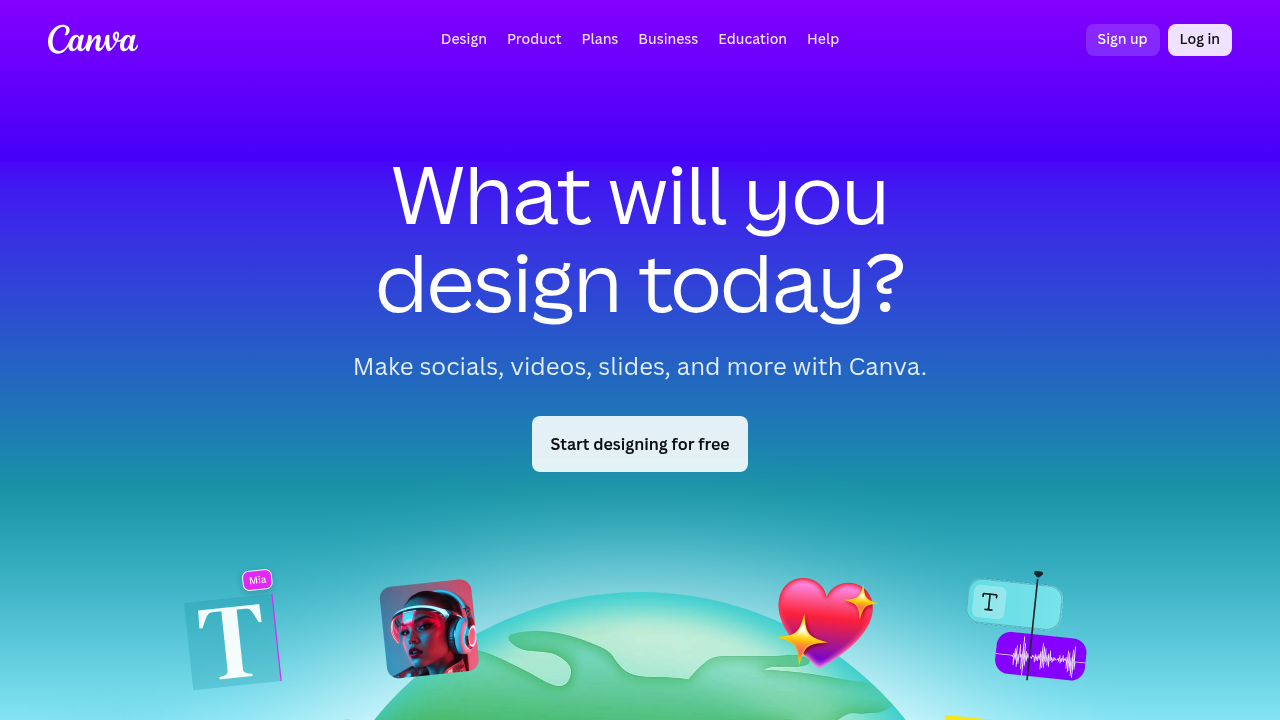
Canva is the best example to study if you are building a product as a solopreneur or small team.
-
How it makes money: Freemium subscriptions, paid assets, team plans.
-
Why it works: The free tier is genuinely useful, but power features (brand kits, advanced assets, workflows) make the upgrade feel natural.
-
The lesson: Build a free experience that solves a real job, then charge for speed, scale, or consistency.
2. Spotify
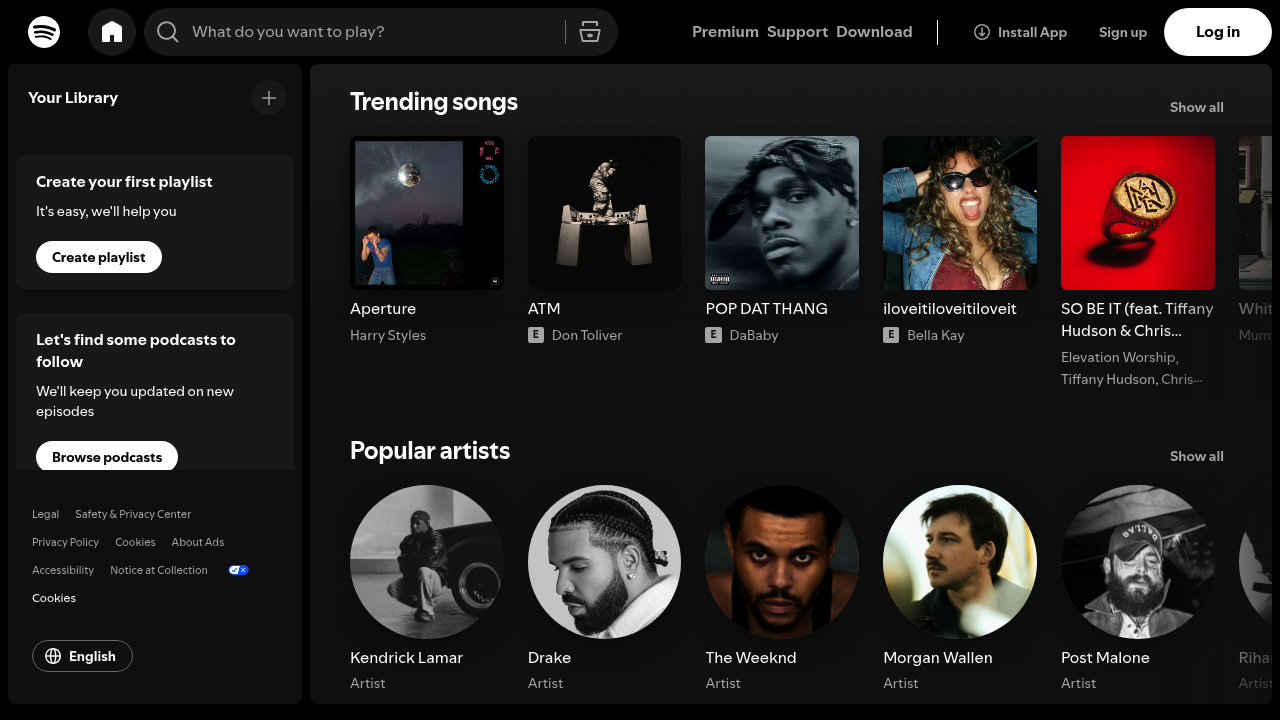
Spotify shows a clean "free with friction, paid without friction" model.
-
How it makes money: Ads on free listening, subscriptions for premium.
-
Why it works: Users understand the deal instantly: tolerate ads or pay to remove them.
-
The lesson: If you use ads, make the premium path obvious and simple.
3. YouTube
YouTube is a masterclass in multi-sided monetization.
-
How it makes money: Ads, subscriptions, and creator monetization mechanics.
-
Why it works: Content supply is built into the product. Creators bring audiences. Advertisers follow.
-
The lesson: If your users can create value for other users, you can build compounding growth.
4. TikTok
TikTok highlights how attention can become a business.
-
How it makes money: Advertising and commerce-driven placements.
-
Why it works: The product is designed for high session frequency.
-
The lesson: Ads require retention. If users do not come back daily, ads will always underperform your hopes.
5. Instagram
Instagram is a strong example of monetizing "discovery."
-
How it makes money: Ads placed inside feed, stories, and reels.
-
Why it works: The platform can show ads in native formats without breaking the scrolling flow.
-
The lesson: If your interface is content-first, native ad formats can feel less intrusive.
6. Duolingo
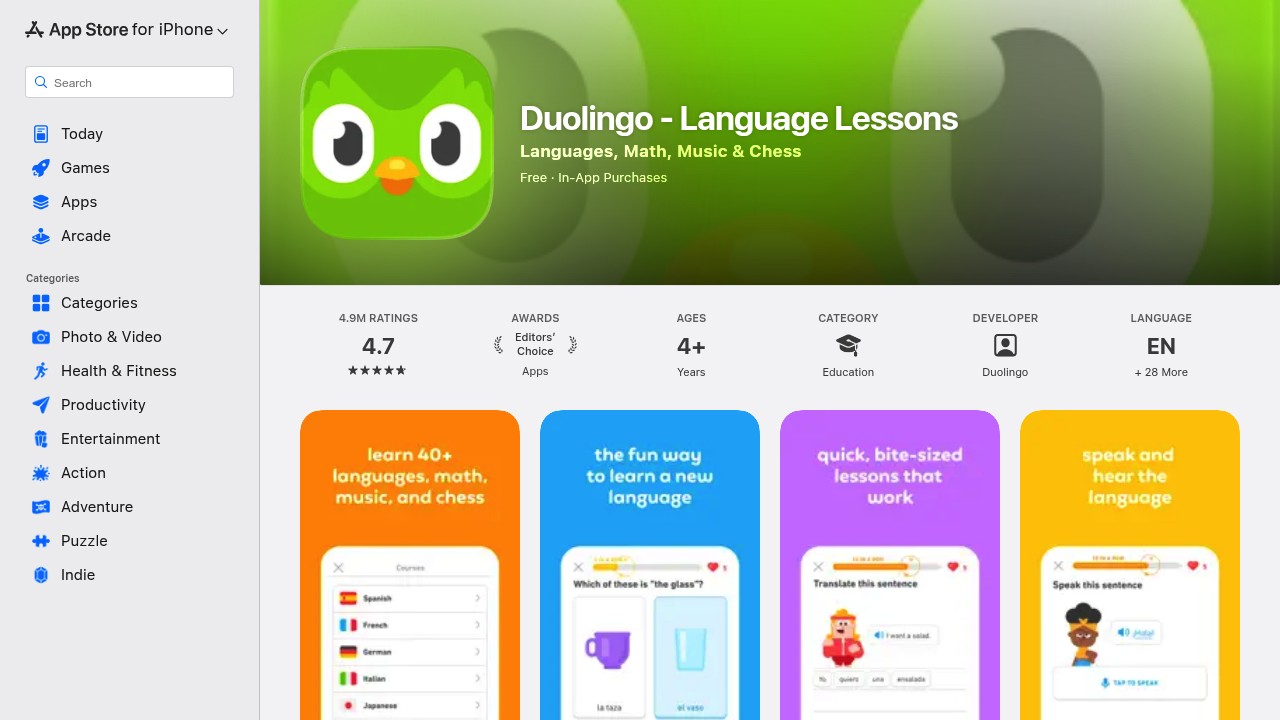
Duolingo is the best example of habit-building monetization.
-
How it makes money: Freemium subscription plus in-app mechanics.
-
Why it works: The product creates a daily loop. Paid upgrades remove friction and add power.
-
The lesson: Subscriptions work best when progress compounds over time.
7. Dropbox
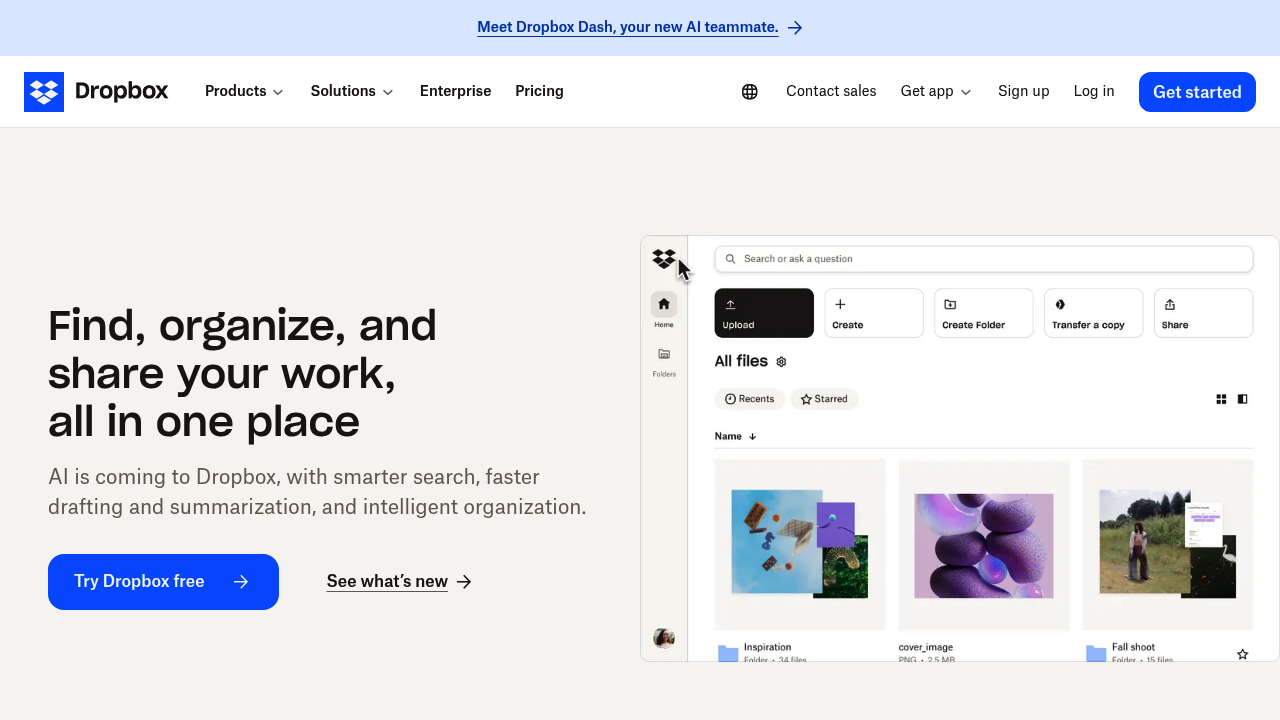
Dropbox is a simple "free storage, paid scale" pattern.
-
How it makes money: Paid storage plans and business plans.
-
Why it works: The free tier gets you started. Growing usage naturally hits limits.
-
The lesson: Usage-based triggers can make upgrades feel fair.
8. Zoom
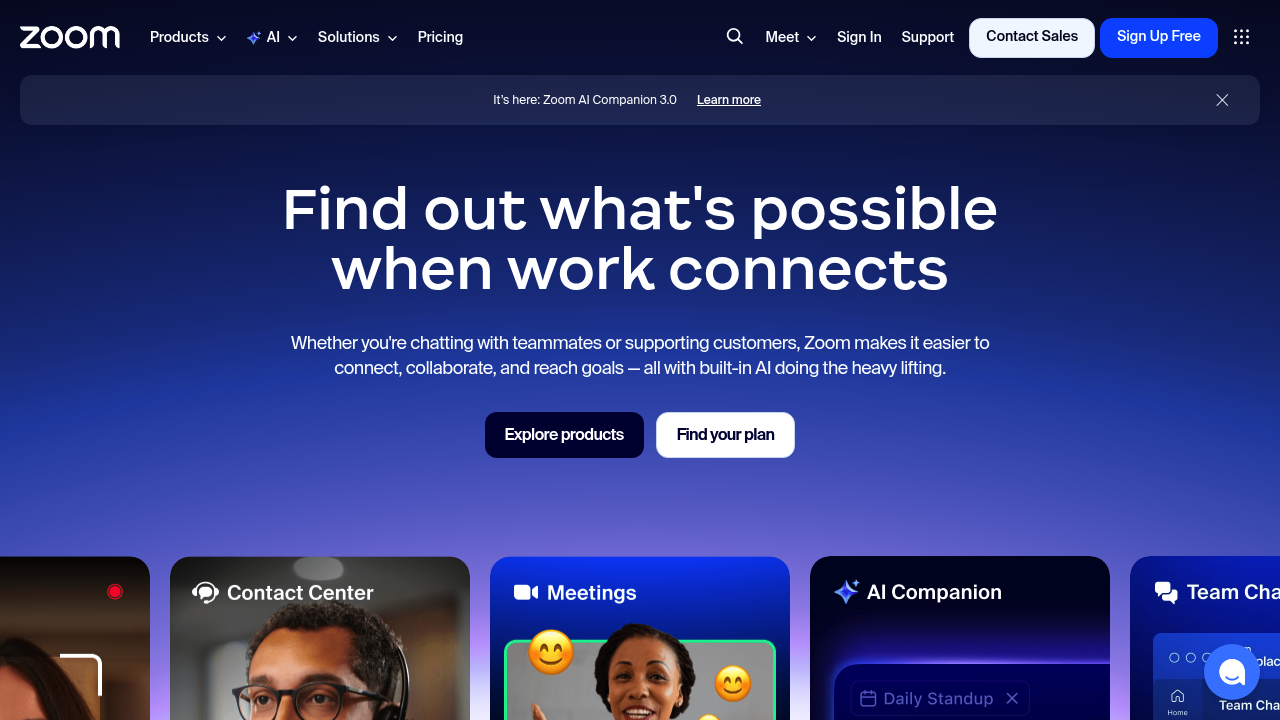
Zoom shows how a free tier can dominate distribution.
-
How it makes money: Paid plans for longer meetings, more features, and business controls.
-
Why it works: The free tier is good enough for "try it now," and paid unlocks serious use.
-
The lesson: Make the first win fast, then charge for professional reliability.
9. Slack
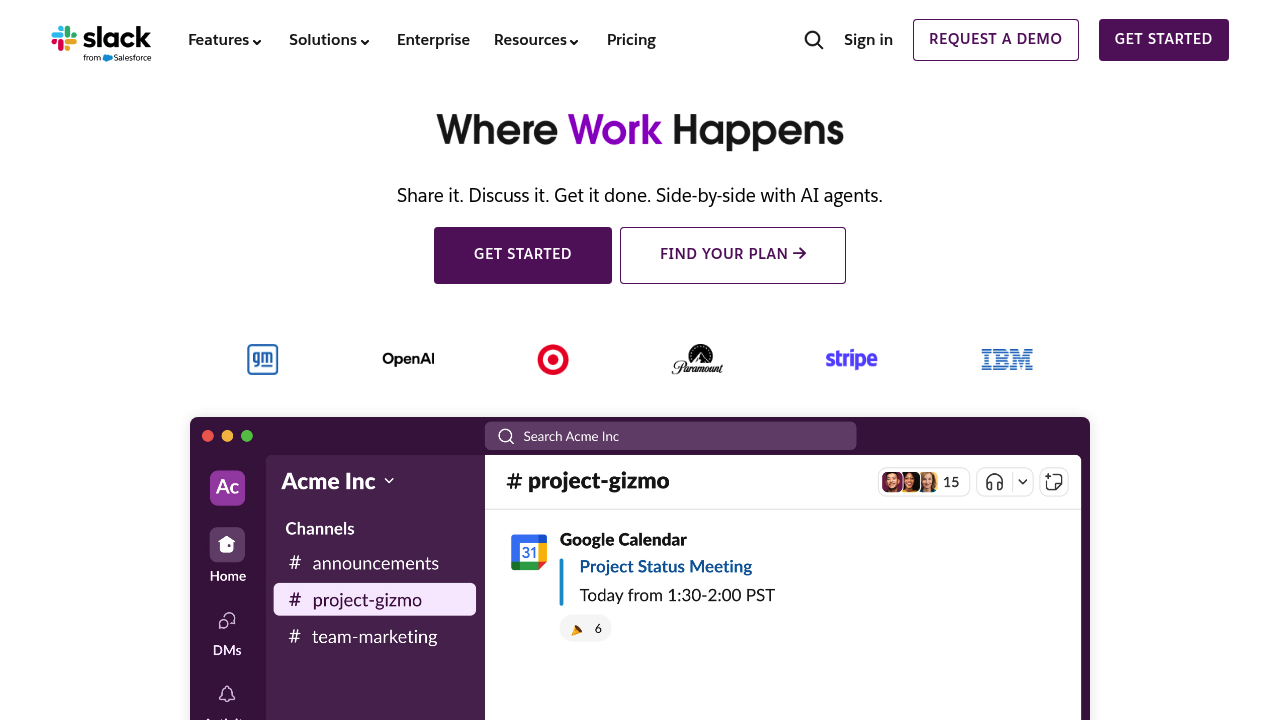
Slack is a strong example of team-based expansion revenue.
-
How it makes money: Per-seat subscriptions and business plans.
-
Why it works: Value increases with more teammates, so growth and revenue align.
-
The lesson: If your app is collaborative, price around teams and permissions.
10. LinkedIn
LinkedIn is a clear case of "users come for free, businesses pay."
-
How it makes money: Recruiting tools, ads, and premium subscriptions.
-
Why it works: The user base is the asset. Businesses pay to access it.
-
The lesson: If you can build a valuable directory or network, sell advanced access to professionals.
A practical decision guide: pick a monetization model that matches your app
Use this section to avoid the most common early mistake: choosing a monetization model that fights your product.
Step 1: Identify your "paid moment"
-
User gets an immediate result: Consider in-app purchases or a one-time upgrade.
-
User builds ongoing progress: Consider a subscription.
-
User is mainly consuming content: Consider ads, then offer ad-free premium.
-
User is buying something else: Consider affiliate or marketplace fees.
Step 2: Choose what you will limit
-
Limits on usage: Caps on exports, storage, projects, or runs.
-
Limits on time: Trials, session length, cooldowns.
-
Limits on collaboration: Seats, roles, approvals, admin controls.
-
Limits on access: Premium templates, integrations, automations.
Step 3: Build the upgrade path without dark patterns
If you monetize with subscriptions or in-app purchases, do not "trick" users into paying. It is short-term revenue and long-term brand damage.
The U.S. Federal Trade Commission (FTC) calls out "dark patterns" that mislead users into purchases or make cancellations difficult. You want the opposite: clear choices that build trust.
-
What to copy from the best apps: Clear value, clear pricing, easy cancellation.
-
What to avoid: Hidden fees, confusing toggles, fake urgency, hard-to-find cancel buttons.
If you are building your own app: monetize early, without slowing down development
Most founders wait too long to wire up monetization because it feels "complex." But you can design monetization as a simple system:
-
What you sell: A feature, a limit increase, or a workflow outcome.
-
Who you sell to: Individuals, teams, or businesses.
-
How you charge: Subscription, one-time purchase, usage-based, or marketplace fee.
If you want to move fast, start with a basic paid tier and one upgrade trigger. You can refine later.
When you are prototyping, an Artificial Intelligence (AI) app builder can help you ship faster without hiring a full team up front. QuantumByte’s pricing guide is built around turning a plain-English idea into a working app in days, then letting a development team finish the hard edges when needed. If that is your bottleneck, start with how an AI app builder works and map your paid features into the build.
If you are ready to turn your idea into a structured build plan you can monetize, you can start with the pricing guide for QuantumByte today.
Common "free app" revenue stacks (copy-and-paste patterns)
You do not need to invent a model. You need to match a model to your product.
-
Freemium + subscription: Give a real free tier, then charge for power, scale, or teams.
-
Ads + subscription: Monetize attention, then offer an ad-free upgrade.
-
IAP + subscription: Sell add-ons, then sell a membership that makes add-ons cheaper or frictionless.
-
Affiliate + premium tools: Earn on referrals, then sell premium workflows that save time.
-
Marketplace fee + promoted placement: Take a cut of transactions, then sell boosted visibility.
If you want more real examples to compare, see app monetization strategies with real examples.
Key takeaways you can act on this week
How do free apps make money? They do it by designing a value loop where free use creates a clear path to paid value.
-
Pick one primary monetization model first: A single clear model is easier to build, market, and measure.
-
Design the upgrade trigger early: Your paid tier should be activated by a real limit or real need.
-
Protect trust: Transparent pricing and easy cancellation beat clever tricks.
-
Study proven patterns: Apps like Canva, Spotify, and Slack show different paths depending on your product.
If you want to productize your expertise into a scalable app, consider building around a model you can ship quickly, then refine. For deeper strategy on building a sellable product layer, explore how to build a white-label app you can sell under your brand and, if you are weighing custom development versus off-the-shelf tools, use this build vs buy framework.
Frequently Asked Questions
Do free apps sell your data?
Some do. Many free apps monetize through ads, which can involve data used for ad targeting or measurement. The exact behavior depends on the app’s privacy policy, platform permissions, and ad partners.
Is advertising the easiest way for a free app to make money?
It is often the easiest to implement, but not the easiest to succeed with. Ads usually require high retention and frequent usage. If your app is used once a week, subscriptions or affiliate revenue may fit better.
What is the best monetization model for a small business app?
Freemium subscriptions are often the cleanest for business apps because the value is ongoing and measurable (time saved, fewer mistakes, better visibility). It also scales predictably.
Can a free app make money without ads or subscriptions?
Yes. Common alternatives are affiliate commissions, marketplace fees, paid templates/assets, and one-time upgrades. The key is that you are enabling a transaction or selling a digital add-on that users want.
How early should I add monetization to my app?
As early as you can do it without blocking the first win. A simple paid tier and one upgrade trigger is enough to validate demand before you build a long roadmap.